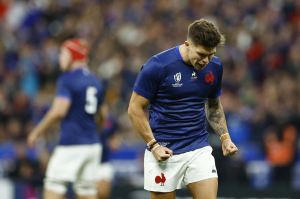
Billed as “The One to Win”, the Champions Cup is widely regarded as the world’s best club rugby competition. The top clubs in Europe – and, since 2022, South Africa – clash in a highly competitive 24-team tournament that culminates in a final at an iconic European stadium.
The right to play in the Champions Cup has to be earned, with the top eight teams in each of the United Rugby Championship (URC), French Top 14 and English Premiership qualifying for the tournament (those that don’t, compete in the second-tier Challenge Cup).
French giants Toulouse have the most Champions Cup titles, with six, follow by Ireland’s Leinster (four), English club Saracens (three) and another French club, Toulon, with three (in a row, the only club to achieve the feat).
BETTING TRENDS
The Champions Cup provides some of the sharpest betting odds with several trends having emerged.
Total points
Knockout matches between French and Irish clubs typically trend under 48 points, mostly due to their set-piece focus, while those between English and South African clubs tend to produce more points.
Margin bets
Blowouts become less frequent past the quarter-finals, as the quality of teams increases and contests become tighter. The real value lies in predicting matches with a narrow margin of 1-8 points.
Try-scorers
Loose forwards are often overlooked but can offer great value, especially in forward-dominated games.
Set piece
Lineout success and maul counts are great indicators of how a game will unfold as they lead to possession and territorial dominance for teams and more scoring opportunities.
HISTORY
The inaugural tournament, in 1995-96, coincided with the end of rugby’s amateur era and the start of professionalism. English and Scottish teams did not take part in the first Heineken Cup, as it was then known – due to disputes over the tournament’s structure, governance and financial arrangements – although they would join the following season. In their absence, 12 teams – representing Ireland, Wales, Italy, Romania and France – competed for the title of European club champions, won by Toulouse, who beat Cardiff 21-18 in the first ever final at Cardiff Arms Park.
In 2014-15, the Heineken Cup, which had been managed by European Rugby Cup Ltd (ERC) became the Champions Cup, run by the new European Professional Club Rugby (EPCR). The restructure was due to disputes between stakeholders, with the English and French clubs claiming that the ERC’s governance, qualification criteria and revenue distribution favoured the Celtic nations (Ireland, Scotland and Wales). EPCR provided a more balanced representation for the English Premiership, French Top 14 and Pro12 (which became the URC).
The qualification of South African teams – the Bulls, Sharks and Stormers – for the 2022-23 Champions Cup added an exciting new element to the competition and gave it a global appeal. The three sides had qualified through the URC, which had been launched in 2021-22 and won by the Stormers. All three South African teams qualified for the round-of-16 knockout stage in the 2022-23 Champions Cup with the Sharks and Stormers progressing as far as the quarter-finals. The three teams will again represent South Africa in the 2025-26 tournament.
FORMAT
The Heineken Cup/Champions Cup format has evolved over the years. When it began with 12 teams, there were four pools of three with the group winners going directly into the semi-finals. The number of teams increased to 16 for the 1996-97 season when English and Scottish clubs joined, and then to 20 and finally 24 (with six pools of four teams).
Lockdown prompted a significant format change during the 2020-21 tournament and in the 2022-23 Champions Cup (the first to include South African teams), the 24 teams were split into two pools of 12. Teams played home and away matches against just two of the sides in their pool (four matches each), with the top eight qualifying for the round of 16.
In 2023-24, there were four pools of six teams, with teams playing four of those in their pool (two home and two away). To determine the round-of-16 fixtures, the four pool winners were ranked from one to four, and the other 12 teams from five to 16 based firstly on their ranking in their pool and then on the number of log points they had accumulated.
While there have been calls to return to the previous pool format that saw the top two in each pool progress straight to the quarter-finals, the 2025-26 edition will again have four pools of six teams. Each pool contains two clubs from each of the three leagues, but clubs from the same URC Shield cannot be in the same pool (so South African teams won’t play each other in the pool stage).
Format for the 2025-26 season:
Four pools of six teams, with each team playing two home matches and two away matches (four matches per team). Teams don’t play teams from their own league in the pool stage.
Pool 1
- Toulouse (France)
- Clermont (France)
- Sharks (South Africa)
- Saracens (England)
- Glasgow Warriors (Scotland)
- Sale Sharks (England)
Pool 2
- Bath (England)
- Toulon (France)
- Munster (Ireland)
- Castres (France)
- Edinburgh (Scotland)
- Gloucester (England)
Pool 3
- Leinster (Ireland)
- Leicester (England)
- Harlequins (England)
- La Rochelle (France)
- Bayonne (France)
- Stormers (South Africa)
Pool 4
- Bordeaux Bègles (France)
- Scarlets (Wales)
- Bristol Bears (England)
- Pau (France)
- Northampton Saints (England)
- Bulls (South Africa)
The top four teams in each pool progress to the round-of-16 knockout stage, with the top two teams in each pool given home-ground advantage.
The fifth-place team in each pool drops down into the Challenge Cup round-of-16 knockout stage.
The sixth-place team in each group is eliminated.
Log points system (pool stage)
- 4 points for a win
- 2 points for a draw
- 0 points for a loss
- 1 bonus point for scoring four or more tries in a match
- 1 bonus point for losing by seven points or fewer
STAR PLAYERS
Some of the world’s greatest players have played on the greatest club stage.
Jonny Wilkinson
The 2003 World Cup-winning England flyhalf played a pivotal role in Toulon’s Champions Cup three-peat from 2012-13 to 2014-15, winning the Man of the Match award after the 2013-14 final against Saracens. His game management and outstanding goal kicking set him apart. Wilkinson scored 108 points in 18 Champions Cup matches.
Brian O’Driscoll
The legendary Ireland centre played a crucial role in all four of Lienster’s Champions Cup title wins (2008-09, 2010-11, 2011-12, 2017-18). He was brilliant on attack, scoring 26 tries in 87 matches and, along with flyhalf Johnny Sexton, revolutionised Leinster’s backline.
Ronan O’Gara
The Munster flyhalf scored a record 1,365 points in 110 Champions Cup matches and was instrumental in their 2005-06 and 2007-08 titles. His tactical nous and reliable boot – both out of hand and at goal – was invaluable as was his leadership, no more so than in Munster’s 2007-08 semi-final upset win against Saracens. O’Gara also went on to win the tournament twice as a coach, with La Rochelle.
Antoine Dupont
The France scrumhalf won the Champions Cup with Toulouse in 2020-21 and 2023-24. After the latter – a 31-22 extra-time win against Leinster in London – he was named Man of the Match having again demonstrated his ability to dictate tempo and execute under pressure.
Bryan Habana
The Springbok wing won back-to-back titles with Toulon in 2012-13 and 2014-15 and was particularly influential in the 24-18 win against Clermont at Twickenham. His experience, leadership and finishing ability made him one of the most dangerous wingers in the competition.
RIVALRIES
Some intense rivalries have developed in the Champions Cup over the years.
Toulouse vs Leinster
The two most successful teams in the competition, with six and four titles respectively. They have only contested one final, though, at Tottenham Hotspur Stadium in 2023-24, with Toulouse winning 31-22 after extra time. Other memorable clashes include the 2021-22 semi-final (Toulouse won 40-17) and 2022-23 semi-final (Leinster won 41–22).
Saracens vs Toulon
Saracens (three titles) and Toulon (three titles) battled for European supremacy during the 2010s, with Toulon beating Saracens 23-6 in the 2013-14 final in Cardiff. Another memorable encounter is the 2012-13 semi-final at Twickenham, which Saracens won 24-12.
Leinster vs La Rochelle
An intense recent rivalry with six meetings since 2021 resulting in three wins for each. La Rochelle won both the 2021-22 and 2022-23 finals (24-21 in Marseille and 27-26 in Dublin). Leinster, though, triumphed 40-13 in the 2023-24 quarter-final at Aviva Stadium.
South African sides have developed new rivalries in the URC – most notably between the Bulls and Leinster – which could spill over into the Champions Cup in the coming seasons.
STATS AND FACTS
Titles
- 6 – Toulouse (1995-96, 2002-03, 2004-05, 2009-10, 2020-21, 2023-24)
- 4 – Leinster (2008-09, 2010-11, 2011-12, 2017-18)
- 3 – Saracens (2015-16, 2016-17, 2018-19)
- 3 – Toulon (2012-13, 2013-14, 2014-15)
- 2 – Leicester Tigers (2000-01, 2001-02)
- 2 – Munster (2005-06, 2007-08)
- 2 – La Rochelle (2021-22, 2022-23)
- 2 – Wasps (2003-04, 2006-07)
- 1 – Northampton Saints (1999-2000)
- 1 – Brive (1996-97)
- 1 – Ulster (1998-99)
- 1 – Bath (1997-98)
- 1 – Exeter Chiefs (2019-20)
- 1 – Bordeaux Bègles (2024-25)
Facts
- French clubs have won 13 Champions Cup titles, followed by 10 by English clubs and seven by Irish clubs.
- Toulon are the only club to win three consecutive Champions Cup titles, while Leinster and La Rochelle have both gone back to back.
- La Rochelle won a record 14 consecutive matches from 2021 to 2023.
- Toulouse and Leinster have reached the most finals (eight). Since last winning the tournament in 2017-18, Leinster have lost four finals (2018-19, 2021-22, 2022-23, 2023-24).
- Leinster prop Cian Healy made a record 114 appearances in the Champions Cup, including a record eight in a final.
- French flyhalf Frédéric Michalak won the Champions Cup six times (three with Toulouse and three with Toulon).
- Former Leinster flyhalf Johnny Sexton appeared in six finals, scoring a record 86 points.
- Former England wing Chris Ashton scored a record 41 tries in 70 Champions Cup matches while appearing for Northampton Saints, Saracens, Toulon, Sale Sharks and Leicester Tigers.
- Toulouse speedster Vincent Clerc is next on the list with 36 in 83 matches.
- Bordeaux Bègles wing Damian Penaud broke Ashton’s record of 11 tries in a season (for Saracens in 2013-14) when scoring 14 in the 2024-25 season.
- Former Munster flyhalf Ronan O’Gara holds the record for the most points scored in the Champions Cup – 1,365 in 110 matches. Saracens and Racing 92 flyhalf Owen Farrell has 874.
- Ulster flyhalf David Humphreys scored 37 points in a match against Wasps in the 2001-02 season, including a record four drop goals.
- Clermont wing Napolioni Nalaga scored the fastest try in Champions Cup history, taking just 17 seconds to cross the line against Scarlets in the 2013-14 season.
- Toulouse scored the most points in a match (108), the most tries (16) and achieved the biggest winning margin (92) after thrashing Ebbw Vale 108-16 in the 1998-99 season.
- A record crowd of 81,774 watched the 2011-12 final between Leinster and Ulster at Twickenham. The 2024-25 final between Bordeaux Bègles and Northampton Saints was watched by 70,225 at Cardiff’s Principality Stadium.